About the chef
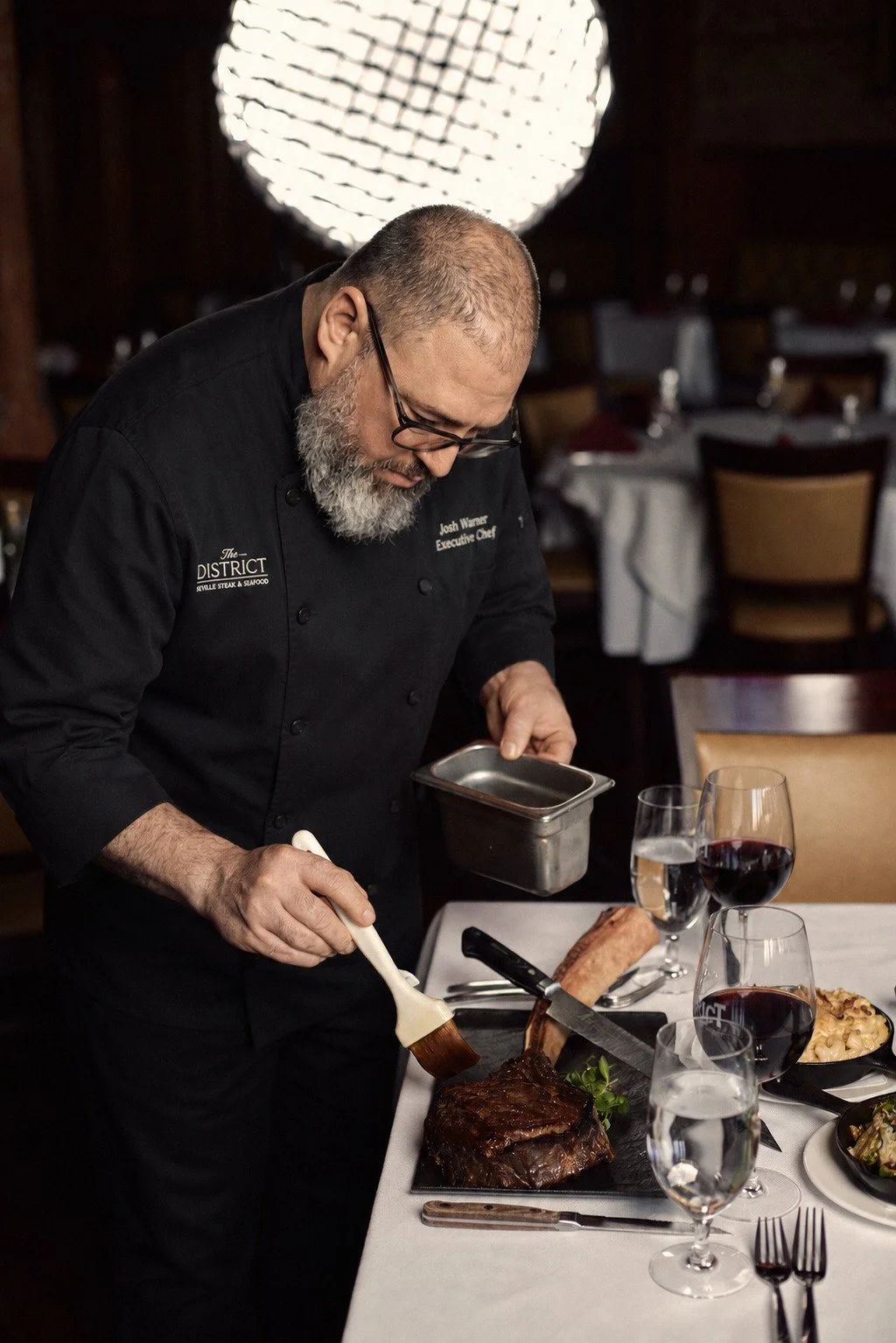
Early Beginnings: Originally from Washington, D.C., and raised in Atlanta, Georgia. With over 30 years cooking experience, Chef Josh Warner has built a reputation for combining classic steakhouse technique with Gulf Coast seafood and an ingredient-driven, contemporary approach. He still hand cuts all steaks and has helped shape the restaurant's identity around premium dry-aged beef, fresh Gulf seafood, and seasonal menus.
Education: Graduated with a Culinary Arts degree from the Art Institute of Atlanta in 2000.
Mentorship & Experience: Worked under notable chefs including Kevin Rathbun, Scott Serpas, and Karen Hilliard, and served as executive chef at Atlanta mainstay Ray's on the River, giving him a strong foundation in refined American cuisine.
Local Move: Moved to the Pensacola area to work as executive chef at The Grand Marlin before launching The District: Seville Steak & Seafood.
Wagyu
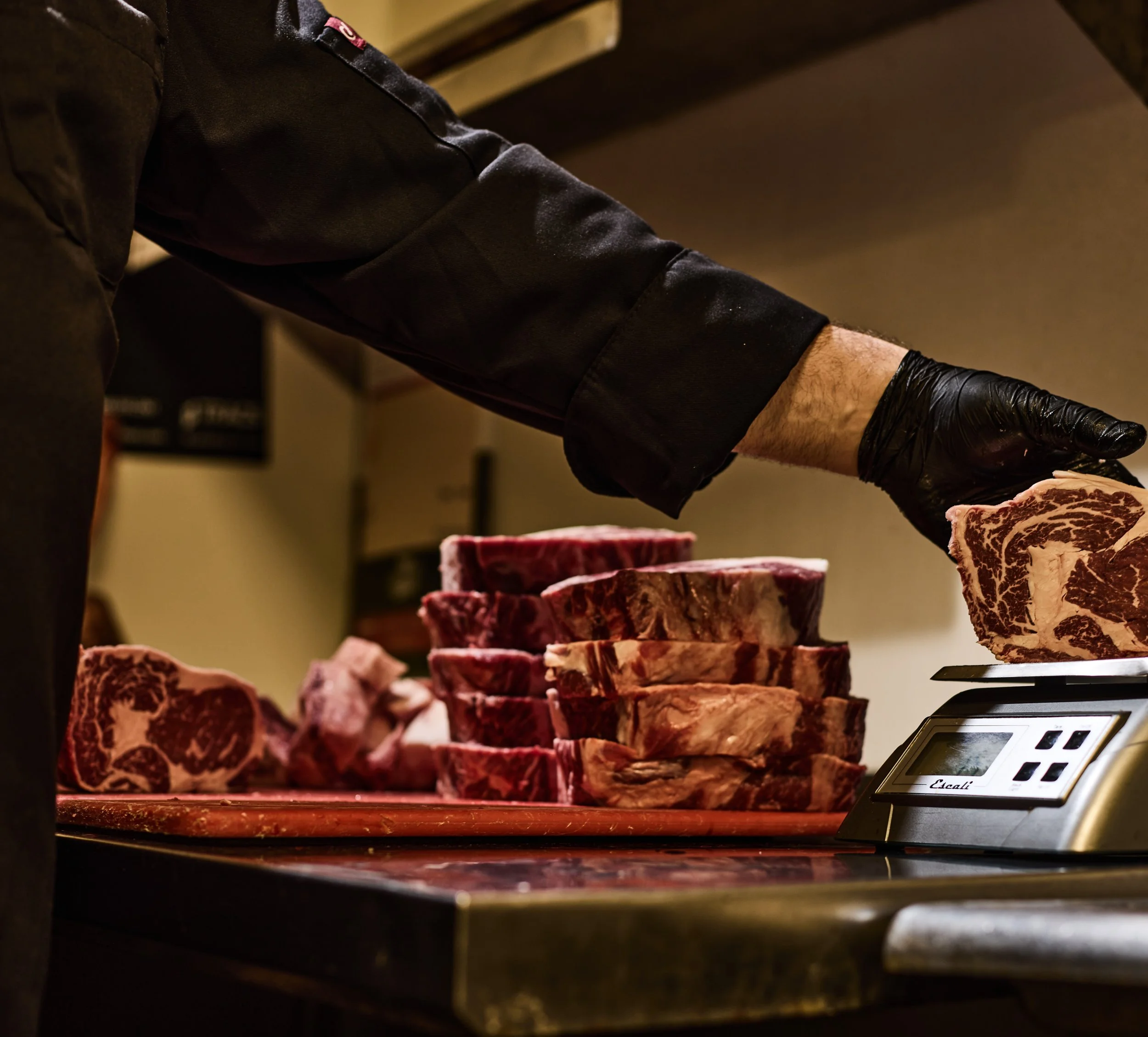
American Wagyu Flat Iron steak (Sakura Wagyu Farms - Westerville, OH), roasted fingerling potatoes, grilled chili crunch broccolini, demi glaze.
The Breed: Features full-blood Japanese Black Wagyu tracing back to legendary Tajima bloodlines from Japan.
The Method: Unlike typical U.S. beef cattle that are grain-fed for 90 to 120 days, Sakura Wagyu cattle are fed an expert-formulated vegetarian diet, including specialized grains and probiotics, for a minimum of 400 days
The Meat: This extended process creates intricate marbling and a rich flavor, resulting in beef with twice the monounsaturated fats (healthier omega-3 and omega-6 fatty acids) of traditional beef.
Standards: The cattle are raised without growth hormones, stimulants, or antibiotics.
Tomahawk
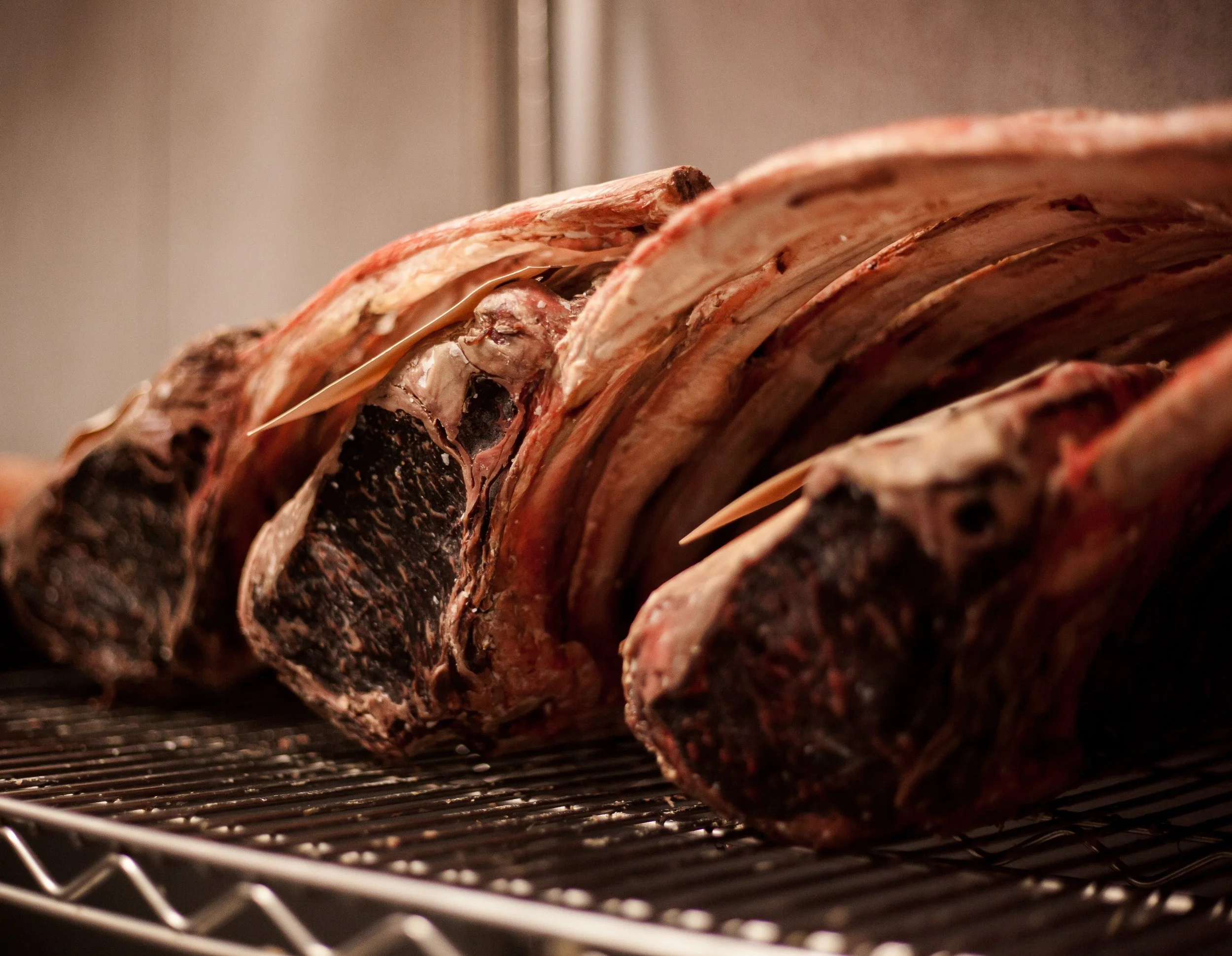
38 oz Tomahawk Ribeye, in-house dry aged for a minimum of 35 days, sliced & served à la carte.
The Breed: Certified Angus beef. Less than one-third of all Angus-influenced cattle qualify for this specific, premium brand.
The Method: Dry aging temperatures are kept around 34° F to 38° F with 75% to 85% humidity and carefully regulated airflow. Over time, moisture evaporates and a hardened outer crust (the pellicle) forms on the exterior of the meat. Before it is cut into individual steaks, this hardened outer crust, along with the dried exterior fat, is trimmed completely away.
The Meat: Because 10% to 15% (or more) of the water weight is lost, the beefy flavor becomes incredibly concentrated. Instead of tasting like fresh meat, it develops a complex flavor profile that is often described as nutty, earthy, or intensely umami. Furthermore, because the muscle tissues break down, it becomes significantly softer and more tender than conventional beef.
Standards: Certified Angus Beef (CAB) requires cattle to have a predominantly black hide and pass 10 strict science-based quality standards managed by the American Angus Association and verified by independent USDA graders